One of the things experienced waterfowl hunters appreciate most about Arkansas is the length of the hunting calendar. Between regular duck season, standard goose season, and the conservation goose season that extends well into late winter, there are more days to hunt than most other states offer.
Taking full advantage of that calendar requires hunting services that are prepared for each phase — with the right locations, the right setups, and the right expertise for ducks, geese, and light geese at different points in the season. Cupped Wings Guide Service operates exactly that kind of year-round waterfowl program.
Table of Contents
- Understanding the Arkansas Waterfowl Calendar
- Duck Season: Prime Time for Timber and Field Hunting
- Regular Goose Season in Northeast Arkansas
- Conservation Goose Season: Extended Opportunity
- How Cupped Wings Prepares for Each Phase
- Booking Across Multiple Season Segments
- FAQ
Understanding the Arkansas Waterfowl Calendar
Arkansas’s waterfowl season structure gives hunters a long window of opportunity compared to most states. Understanding how that calendar breaks down helps you target the right species at the right time.
Duck Season: Typically runs in two segments — an early teal season in September and the main duck season from late November through late January. Peak mallard concentration usually occurs in December and January.
Canada Goose and Specklebelly Season: These seasons run concurrently with or slightly overlapping the main duck season. Exact dates vary by zone and year.
Conservation Goose Season (Light Geese): This extended season specifically targets snow geese and Ross’s geese. It typically runs from the close of regular goose season through spring, often into March or April.
Each phase has its own set of opportunities, tactics, and target species.
Duck Season: Prime Time for Timber and Field Hunting
The main duck season in Arkansas is what most waterfowl hunters plan their year around. When northern cold fronts push birds south and migration is at its peak, northeast Arkansas fills with ducks.
Early Season vs. Late Season
Early season hunting (late November into December) tends to feature more species variety. Teal, pintails, gadwall, and wigeon are all active alongside early-arriving mallards.
Late season hunting (January) often produces the heaviest mallard concentrations. These birds have settled into their winter range and know the area well — which makes decoy and calling quality even more important.
Cupped Wings has setups for both phases, adapting their approach based on which birds are currently active and where they’re concentrated.
Regular Goose Season in Northeast Arkansas
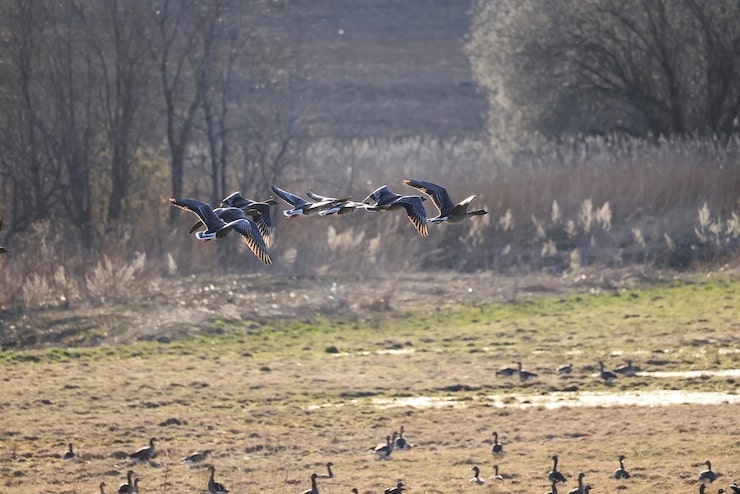
Arkansas hosts impressive goose populations during winter. Specklebelly geese — properly called greater white-fronted geese — are a prized target and winter in large numbers across the agricultural fields of northeast Arkansas.
Specklebelly Hunting
Specklebellies are considered challenging and rewarding to hunt. They’re call-responsive birds, which means a skilled guide with good calling technique can work them aggressively. Watching a flock of specklebellies work a decoy spread is one of the highlights of any Arkansas goose hunt.
Canada Geese
Canada geese round out the regular season lineup. They’re less numerous than specklebellies in this region but offer solid hunting opportunities when located. Field setups with full-body decoys are the standard approach.
Conservation Goose Season: Extended Opportunity
The conservation goose season is a special extended season specifically authorized by the U.S. Fish and Wildlife Service to help control light goose populations — primarily snow geese and Ross’s geese.
Why Conservation Season Exists
Light goose populations grew dramatically over the past few decades, creating significant ecological damage to arctic nesting grounds. Conservation season was established to provide additional harvest pressure to help stabilize populations.
What This Means for Hunters
For waterfowl hunters, conservation season represents a genuine bonus — additional days in the field after regular season ends, often targeting large flocks of birds in a high-volume hunting environment.
Electronic calls are permitted during conservation season, which isn’t allowed during regular season. This changes the dynamic considerably and can make for fast, action-packed hunts when birds are actively moving.
Cupped Wings participates in conservation season hunting and can accommodate hunters interested in this extended opportunity.
How Cupped Wings Prepares for Each Phase
Running a full-season operation requires preparation that starts well before opening day. Cupped Wings’ season preparation includes:
Pre-season scouting: Identifying active roost areas, flight paths, and feeding locations before the season opens.
Habitat preparation: Managing water levels on controlled impoundments and ensuring food plots and flooded areas are in optimal condition.
Equipment inventory: Reviewing and updating decoy spreads, blinds, and calling equipment for the upcoming season.
Guide briefings: Reviewing regulations, new land access areas, and tactical approaches as conditions develop.
This preparation level is what allows them to hit the ground running on opening day rather than figuring things out as the season unfolds.
Booking Across Multiple Season Segments
If you’re a serious waterfowl hunter, consider booking across multiple segments of the Arkansas calendar. A duck hunt in mid-December combined with a conservation goose hunt in late January or February gives you two very different experiences on the same productive ground.
Multi-trip bookings also often come with logistical advantages — you know the lodge, you know the guides, and you arrive for your second trip as a familiar face rather than a new guest.
FAQ
- When does the conservation goose season typically run in Arkansas?
Conservation season generally begins when the regular goose season closes and runs through late March or April. Exact dates are set annually by wildlife authorities — confirm current dates when booking. - Are electronic calls permitted during conservation goose season?
Yes. Federal regulations allow electronic calls specifically for light goose hunting during conservation season. - What is the bag limit for ducks in Arkansas?
Duck bag limits are set by the U.S. Fish and Wildlife Service and vary by species and zone. Guides will provide current regulation information before each hunt. - Can I hunt both ducks and geese on the same day?
Yes, in many cases. Arkansas regulations generally allow concurrent duck and goose hunting. Your guide will structure the day to maximize both opportunities. - Is conservation goose season included in standard Cupped Wings packages?
Conservation season availability can be confirmed when booking. Cupped Wings can structure trips around conservation season dates for hunters interested in light goose hunting.
Conclusion
The Arkansas waterfowl calendar gives serious hunters more opportunities than almost any other state. Duck season, regular goose season, and conservation season create a continuum of hunting that spans from early fall well into late winter.
Cupped Wings is set up to run quality hunts across every phase of that calendar. Whether you’re targeting timber mallards in January or setting up on a field full of snow geese in February, their operation has the land, the guides, and the preparation to deliver a memorable experience. Book smart, target the right season for your goals, and let Cupped Wings handle the rest.