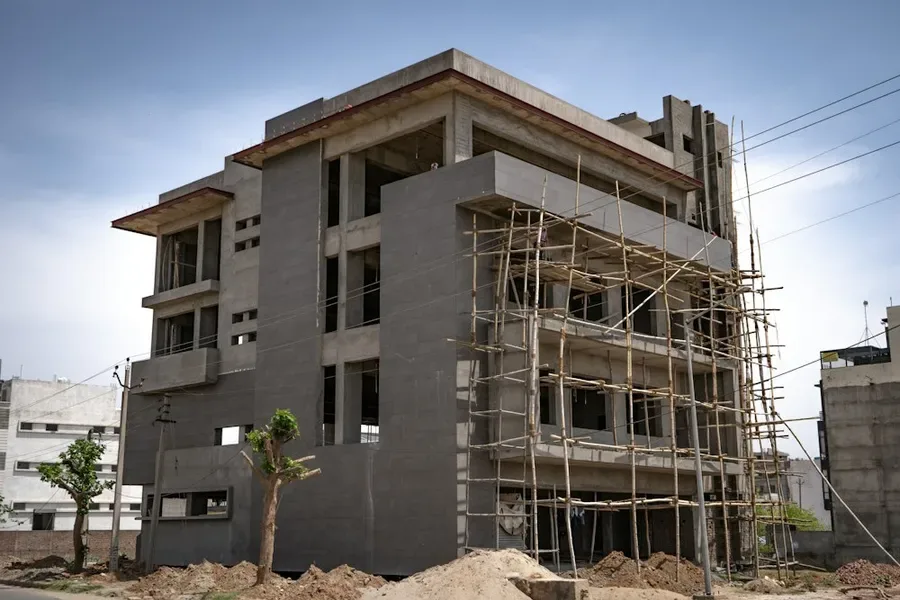
Building or renovating a luxury home in southern Portugal takes more than a good architect and a budget. Every municipality, whether Loulé, Lagos, Tavira or Albufeira, has its own planning office and its own way of reading the rules. A construction manager who works locally knows how those offices operate, which saves owners a lot of waiting.
The role is simple to describe. The manager checks that the design matches what gets built, selects and oversees the contractors, and keeps the paperwork in order from the first week. For owners who live abroad, that is often the difference between a project that runs on schedule and one that drifts for a year.
The Algarve suits many styles, from traditional whitewashed villas to clean-lined modern houses. Whatever the style, the same things decide whether a build goes well: a detailed plan, honest communication, and someone watching the site every week.
What Construction Management Means in Practice
A high-end build in Portugal has many moving parts. Design, budget and site work all need to agree with each other. An independent construction manager works for the owner, not the builder, and checks that the work follows the approved drawings.
Most problems on a build come from small misunderstandings that nobody caught early. A wrong specification, a missed instruction or an unapproved change can each add weeks and thousands of euros. Regular supervision catches these while they are still cheap to fix.
The manager also acts as the link between architects, engineers, the câmara municipal and the site crew. A team that speaks both English and Portuguese makes this much easier. They can attend municipal meetings, file licence applications, and deal with inspections, while the owner gets clear updates in English.
The involvement runs from the first land feasibility check to the day keys are handed over. Along the way the manager sets a realistic schedule, compares subcontractor quotes, and inspects materials when they arrive on site.
Traditional Masonry vs Modern Build Systems
Masonry and reinforced concrete. This is still the most common method in southern Portugal, and for good reason. The walls have high thermal mass, so the house stays cooler in summer. The trade-off is that quality depends heavily on workmanship. Concrete curing, waterproofing layers and the skill of the crew all need regular checking.
Light steel frame. Steel framing is faster to build and gives precise dimensions. It performs well on insulation, both thermal and acoustic. The manager’s job here is to coordinate fabrication, assembly and the cladding so the finished house looks and feels like a custom home, not a kit.
Modular construction. Modular homes are built in a factory and assembled on site. This cuts weather delays, site waste and pressure on local labour. Someone still has to inspect the factory work and make sure the foundations are ready before the modules arrive. A mistake there is hard to correct once the units are delivered.
What a Project Manager Actually Does
The work starts before any digging. The manager reviews the architectural drawings, checks zoning limits and arranges the engineering reports. Sorting this out early prevents redesigns and licensing delays later.
They follow the contractors’ daily schedules, check structural elements as they go in, and make sure the site stays safe and tidy. Owners who are overseas receive reports with photos, video walkthroughs and plain status updates, so they always know where things stand.
Money control is just as important. The manager tracks spending, reviews each contractor invoice, and approves stage payments only when the finished work meets the agreed standard. This protects owners from overcharging, budget creep and paying for work that is not yet done.
Luxury Villa Renovations
Older coastal properties come with their own problems. Many need structural reinforcement, new plumbing and rewiring before any cosmetic work makes sense. A good manager inspects the foundations first, flags risks early and plans the restoration so the property keeps its Mediterranean character.
Modern additions need careful planning too. Smart-home systems, efficient HVAC, underfloor heating and double glazing all have to fit into an older layout without damaging it. The manager brings in the specialists, such as joiners, stonemasons and automation technicians, and keeps their work in the right order.
The coast adds another factor. Salt air and humidity attack materials quickly. Marine-grade materials, proper damp-proof membranes and well-applied exterior insulation systems make a real difference over time. Supervision matters because even the right product fails if it is installed badly.
Why Bilingual Oversight Matters
Administrative work in Portugal runs in Portuguese. Municipal meetings, legal documents and site instructions all need exact language.
Updates arrive in clear English, explaining the technical decisions and the timeline. On site, instructions go to the crew in Portuguese, so nothing gets lost.
A typical project follows this order:
- Initial consultation to set scope, budget and design direction
- Choosing the architectural team and submitting the permit application
- Contractor bidding, comparison and contract signing
- Site supervision, stage approvals and quality checks
- Final snagging, utility connections and handover
Hiring an independent construction management Algarve gives you one person who is responsible for the details and answers only to you. That takes a large share of the daily stress off the owner and keeps the project moving. For anyone building a villa from a distance, it is one of the more practical decisions they can make.