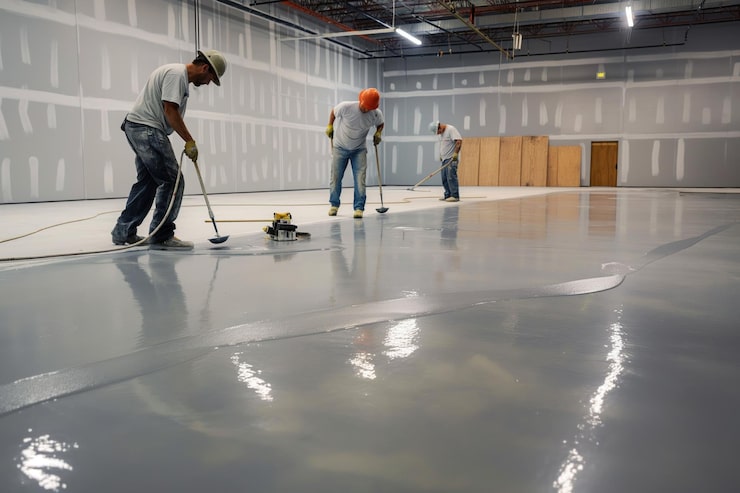
Imagine a distribution hub where the shipping team keeps wiping gray powder off the stretch wrap. It settles on boxes, on shelves, on the dashboards of the lift trucks. A customer mentions it once, politely, and now it’s on the agenda.
That powder usually comes from the floor itself. Before anyone talks about a full coating, good epoxy flooring contractors look at whether the concrete just needs hardening, or whether it needs real protection on top.
The Dust Nobody Budgets For
Where It Comes From
Concrete wears from the top down. Tires grind the surface all shift long, sweepers lift what loosens, and fine grit ends up in the air and on the product. It’s a slow leak, not a disaster, and that’s why it gets ignored for so long.
Honestly, a lot of managers treat dust like weather. Annoying, normal, someone else’s problem. Then a customer audit lands and suddenly the floor is everybody’s problem.
What It Costs You Quietly
Say a warehouse sweeps twice a day and still loses the fight. Staff spend minutes every shift wiping things down, and the pallets that sit near the worst aisles look tired before they ship. Those minutes don’t show up on any invoice, yet they add up.
Densifiers in Everyday Terms
HPS lists liquid concrete densifiers for large commercial spaces and distribution hubs. According to the page, the liquid soaks into the concrete to dust proof it, harden it and economically extend its life. Think of it as strengthening the top layer from the inside, rather than laying a skin over it. For a big floor, that difference in approach can change the whole budget conversation.
That’s a different tool from a coating, and sometimes a smarter one. If the floor is basically sound and the complaint is powder, a densifier may do the job without the cost of a thick system.
Why Contractors Like Starting Here
It’s simpler. There’s no multi layer buildup to schedule, so the work tends to disturb operations less, though the crew should still confirm that for your building. It also tells everybody something about the slab before more money gets spent.
When It Won’t Be Enough
A densifier won’t fix a floor that’s cracked, chemically stained or taking steady impact. If pallet jacks have chewed the joints, the problem has moved past dust. At that point a proper resin system starts to make sense.
Reading the Floor Honestly
Walk the building with the crew. Point out the dusty zones, the stained corners, the joints that have chipped. When you’re sorting through epoxy flooring contractors, notice who looks at the concrete first and talks about products second. HPS Flooring LLC, based in Green Brook, New Jersey, says it has installed epoxy floors since 1988.
Prep, Even for a Light Job
The page describes precision shot blasting or diamond grinding to reach an exact Concrete Surface Profile, or CSP, and it mentions moisture testing. Those steps are described for coating work, so ask your contractor what applies to a densifier job on your slab. Don’t assume the answer.
Good crews don’t mind that kind of question. They’d rather have it now than after the floor is down. Nobody wants a surprise on day three of a job, least of all the people holding the grinder.
When a Full System Wins
Heavy Traffic and Hard Knocks
For warehouses, heavy manufacturing and logistics hubs, HPS describes high solids, multi coat epoxy systems built for forklift traffic, impact and chemical exposure. That’s the answer when dust is only the first symptom of a floor that’s being beaten up daily.
Resurfacing Instead of Replacing
The page also mentions warehouse floor resurfacing. If your concrete is worn but still solid, ask whether resurfacing could save you from tearing out and pouring new slab. The answer depends on the slab’s condition, so let the crew look before you hope. A worn surface can look worse than it is, and a clean looking one can hide trouble underneath.
Making the Call Without Guessing
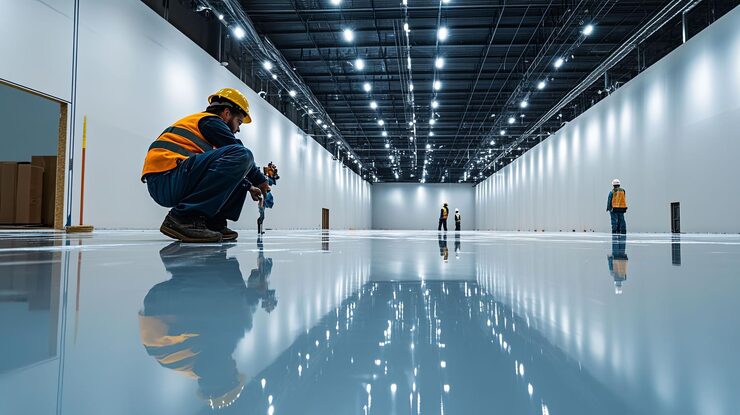
Say you have two buildings, one with dusty but sound concrete and one with chipped joints and oil stains. They don’t need the same fix, even though both look rough. A single epoxy flooring contractor who recommends the same product for both is probably selling, not diagnosing.
HPS says it builds each system around how much impact the floor takes and what chemicals and moisture it meets, and that it isn’t tied to a single manufacturer. That’s the kind of approach worth asking any bidder about.
Order of Operations
Say you phone the first epoxy flooring contractor you find and ask for a price per square foot. You’ll get a number. What you won’t get is a diagnosis, because nobody has seen the slab. A price without a site visit is a guess in a nicer font.
Flip it around. Book the visit first and let them scratch the surface, literally. Then ask for numbers. It adds a week, maybe, and it saves you from paying for the wrong fix on a floor that was never the problem you thought it was.
Time and Disruption
HPS says it aims for minimal downtime and on time, on budget delivery. Dust work and coating work disrupt a building differently, so ask for a plan that names which aisles close, for how long, and where product goes meanwhile.
If you run a hub where trucks arrive at fixed hours, hand over that schedule on day one. An epoxy flooring contractor can plan around real constraints far better than around polite guesses, and you’ll find out quickly who actually listens when you describe your docks and shifts, plus the one aisle that can never close.
The Short Version
Powder on the pallets is a floor problem, and the right fix depends on the slab. Sound concrete may only need a densifier, while a beaten up surface needs a real system. Ask epoxy flooring contractors to look before they quote.
HPS Flooring LLC has a free appointment form on its website, and it says it serves Somerset and Middlesex County plus wider New Jersey. Walk the floor with them, then decide. A floor is easier to judge standing on it than reading about it, and any crew worth hiring will say the same.
FAQs
What does a liquid densifier do?
According to HPS, it soaks into concrete to dust proof and harden it and to extend its life without a full coating.
Is a densifier better than epoxy?
Neither is better in every case. Sound concrete with a dust problem may suit a densifier. Heavy impact or chemicals point to epoxy.
How long can a properly installed system last?
HPS says ten to twenty years for a properly installed coating system.
Can an epoxy flooring contractor resurface a worn warehouse floor?
HPS mentions warehouse floor resurfacing. Whether it fits your slab depends on its condition, so ask for a site visit.